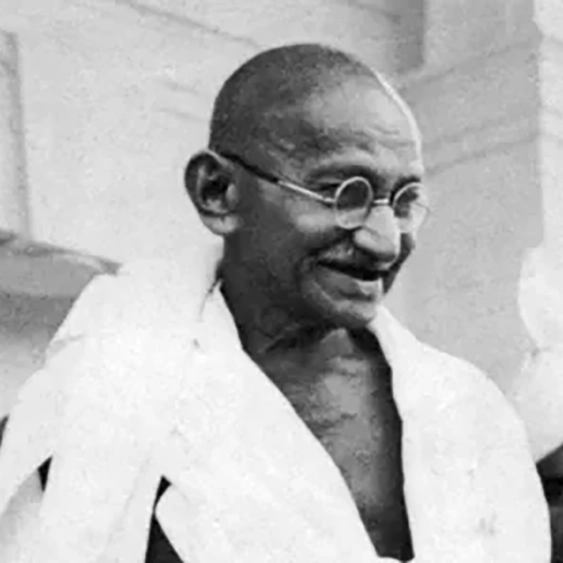
Mohandas Karamchand Gandhi (2 October 1869 – 30 January 1948) was an Indian lawyer, anti-colonial nationalist and political ethicist and writer who employed non violent resistance to lead the successful campaign for India’s independence from British rule. He inspired movements for civil rights and freedom across the world. The honorific Mahātmā (from Sanskrit, meaning great-souled or venerable), first applied to him in South Africa in 1914, is now used throughout the world.[2]
Assuming leadership of the Indian National Congress in 1921, Gandhi led nationwide campaigns for easing poverty, expanding women’s rights, building religious and ethnic amity, ending untouchability, and, above all, achieving swaraj or self-rule. In August 1947, Britain granted independence to India.
Gandhi was a prolific writer. One of Gandhi’s earliest publications, Hind Swaraj, published in Gujarati in 1909, became “the intellectual blueprint” for India’s independence movement. The book was translated into English the next year, with a copyright legend that read “No Rights Reserved”.